
How to Play Smack Talk
The match loop for a voice-controlled platform fighter, from 0% to the blast zone.
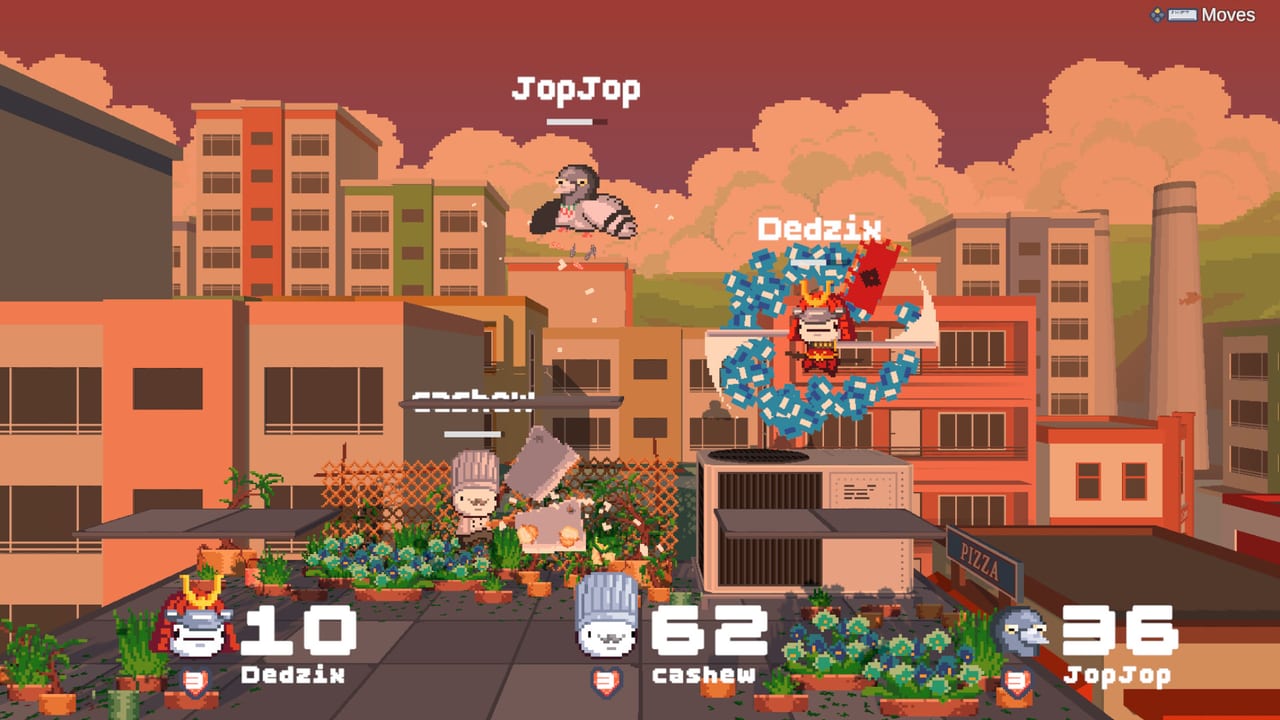
How to play Smack Talk is two overlapping games. The first is a stock-based platform fighter: damage percent climbs, knockback scales, and the last player on stage wins. The second is a party talking game: every attack is a spoken phrase with start-up, a hitbox, and a chance the recognizer hears something else. If you only learn one of those layers, you will either never attack or never recover.
This page is the ruleset after getting started. Bindings live on controls. Phrase theory lives on voice commands. Winning messy rooms is how to win.
The smash-like core
Everyone spawns near 0%. Hits add percent. Higher percent means the same move sends farther. Blast-zone kills take a stock. Hosts choose how many stocks a match uses. That is the same fantasy as Smash or Rivals, just with a microphone on top.
Invulnerability on spawn exists because people were getting clipped before they could speak. Do not waste your first phrase as a panic mash at the respawn platform; take space, then call a real move. Some ultimates were briefly uninterruptible, then the studio stripped unstunnable from all ults while they investigated cancelled-ult bugs, then individual ults (Magical Girl, several others) got protection again. Assume a super can be stuffed unless you just read a patch that says otherwise — patch history is the ledger.
Team versus team is a first-class mode, not a house rule. The host toggles FFA or teams, and whether friendly fire is on. In eight-player FFA you should play like a king-of-the-hill game: farm percent on whoever is already hurt, do not 1v1 in the corner while six people watch. In teams, talk about targets before the phrase, because two people shouting at once is how both kits whiff.
Voice is the attack button
There is no A-button smash in the default fantasy. You say the move. Each fighter has a small spoken kit: basic, up, down, special, recovery, ultimate, plus emotes that do not need to win games. Hold Shift to see the current list. Cadence matters. Duck’s three-piece only completes if you keep repeating the line without resetting. Long theatrical ultimates lose to a fast jab if you wait for the recognizer.
Background noise is a mechanic whether the patch notes say so or not. Party speakers will false-trigger. Headphones help. Discord is still the recommended voice chat; the in-game voice chat was shipped disabled-by-default because the recognition stack would not share the mic cleanly. Text chat exists for lobby codes and salt.
If phrases do nothing, it is usually permissions or the leave-lobby bug, not your accent. Work through mic setup before you reroll the roster.
Lobbies, codes, and player caps
Early Access launched as a friends-only vibe. The lobby browser and lobby codes arrived with Cowboy so you could join strangers. Hosts can kick and can cap the room below eight. High ping rooms were a problem during the first months; a ping counter now sits in the browser. Avoid 200ms lobbies if you care about hit confirm windows.
Spectate-join was added, pulled when it broke mics, then restored after a dedicated fix. If you join mid-match, wait for the next game to pick a fighter. Do not assume you can pause someone else’s stock count.
Random character and random stage are options. Random stage on lava or jail will tilt beginners. Stick to the island or city rooftop until recoveries are muscle memory. Stage layouts are summarized in the stages tool.
There is no split-screen and no CPU. The studio said voice recognition does not work with local multiplayer. One machine is one voice. Host a lobby, share the code on character select, or toggle the room public in the browser. If pubs are empty, use Discord LFG on community — there is no ranked queue to wait in. Steam’s Keyboard Only Option means you can move without a pad; it is not a mute-to-win ruleset. Attacks are still spoken unless a future lobby toggle says otherwise. Other people do not hear your command phrases as proximity chat; in-game voice chat exists, is off by default, and is still worse than Discord.
A practical match plan
Opening: take space with a fast, short phrase. Do not open with an ultimate. Mid-percent: look for a grab-like confirm or a projectile that forces a recovery. Kill percent: stop talking for the sake of talking. One clean edge-guard from combos is worth three missed supers.
When you die, change one thing: volume, phrase length, or jump timing. Do not swap fighters every stock. Give Chef, Cowboy, or Magical Girl a full set as described on beginner picks. After you can take two stocks in a row, then experiment with Diver platforms or Cowboy guns.
Modes the 1.0 client actually has
Online PvP, team mode, host-configured stocks, optional friendly fire, lobby browser, lobby codes, text chat, experimental voice chat, Steam achievements (many named after fighters), and full controller support. There is no ranked ladder to grind. The skill ceiling is lobby reputation and the tier list.
Mac and Linux are real platforms now, with the mic caveats above. Steam Deck is listed Playable. If a Deck session cannot see the mic, treat it as a permission problem, not a missing mode.
Play the objective: be the last stock. Everything you shout should either take space, take percent, or take a stock. If a line does none of those, it is an emote. Save emotes for the win screen.
Frequently Asked Questions
Quick answers to the most common Smack Talk questions.
How many players can join a Smack Talk match?
Up to eight online. Hosts can lower the cap. Team mode and FFA are both supported in the same lobby settings.
Do I need to shout every attack?
Yes for the designed ruleset. Movement is silent; attacks, recoveries, and ultimates are spoken. See voice commands.
What does percent do?
It scales knockback. At high percent, the same phrase that barely moved someone at 0% will send them to the blast zone.
Is there ranked matchmaking?
No dedicated rank. You host or browse lobbies. Skill discussion lives on the character tier list.